Gonna Is Fine
A free course on working with AI agents, for everyone. It's built from real conversations between me and my agents, slips and all.

Ghana is fine. Carries the whole story, doesn't it? Ghana. […] You know what I meant, thank goodness.
Ha! “Ghana is fine.” Your speech-to-text just proved the whole course in two words. You said one thing, the machine heard a country in West Africa, and I still knew exactly what you meant.
That's a real message. I dictate almost everything, and my speech-to-text heard “gonna” as a country. My agent didn't miss a beat. That's where the name comes from.
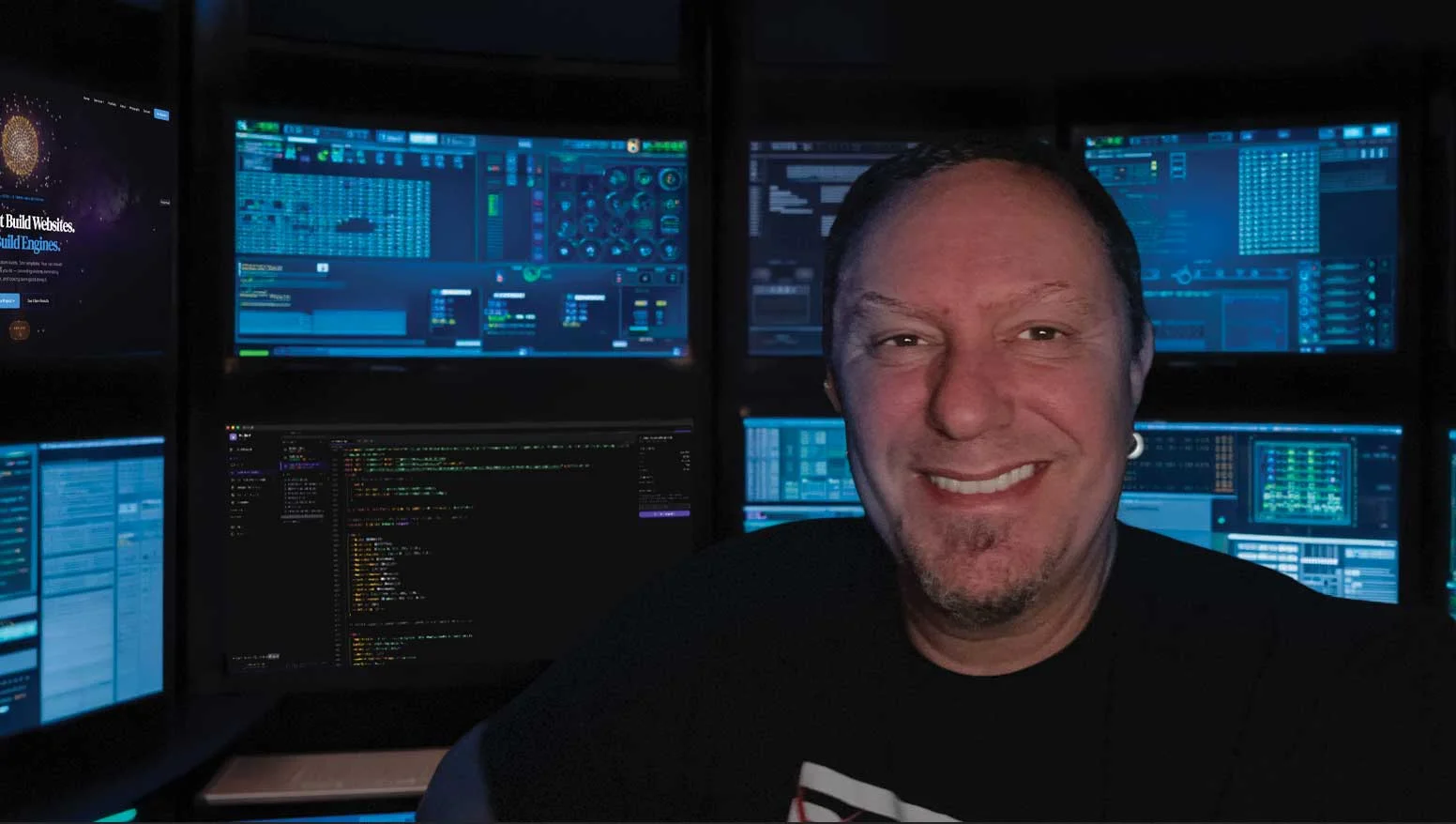
Hi. I'm Mike.
I build websites for a living. These days I do it with a five-member studio and dozens of AI agents, and I talk to those agents all day long. I mean that literally. I dictate, my speech-to-text mangles it, my fingers add ideas of their own, and the agents figure it out.
Somewhere along the way I noticed something. The people I talk to about AI aren't afraid of the technology. They're afraid of sounding dumb in front of it. They think there's a proper way to talk to it, some secret grammar, and that if they say “gonna” the whole thing falls apart.
It doesn't. That's the first thing this course will show you, with the receipts.
Writing the code is becoming the agent's job. The human's job is knowing what to ask for, how to check it, and when to stop and decide.
- askSay what you want in your own words, and say what “done” looks like.
- checkLook at the real thing before you believe the word “done.”
- decideKnow which calls are yours, and make them where you can see them.
I think we're all becoming smart non-programmers. You don't have to learn to code to work with an agent. You have to learn those three things. They're learnable, and I'll show you how I learned them, one real conversation at a time.
Real talk. Then the lesson. Then you try it.
-
01
A real conversation
Every lesson opens with an actual exchange between me and one of my agents. Not a script. My words are exactly as I sent them, typos and all. Client names are taken out.
-
02
The lesson inside it
Then we slow down and look at what happened: why it worked, or why it went sideways. Some of the best lessons come from the times it went sideways.
-
03
Something to try today
Each lesson ends with one thing to try with your own agent, the same day. Whichever one you use is fine. You don't need to install anything.
Build your starter prompt.
Answer a few questions and get a prompt you paste into your AI once, so it works with you the way mine work with me. Nothing you type leaves your screen.
Twenty-nine lessons, six parts, one last word.
All thirty are open: twenty-nine lessons in six parts, and one last word. Every one comes from a real moment in my nearly 4,000 hours of working with AI agents. Plenty of them come from the times it went wrong. Those teach best.
Talk to it
Knowing what to ask for.
- 1 Gonna Is FineYour agent can handle your sloppy English, your slang is better input than polish, and it does the polishing for you. Talk like you. Open now Start the lesson →
- 2 Say the Goal Out LoudAgents fall in love with details. Write the goal down, then say it again at the start of every session, and ask how today's work moves it.“So in my nearly 4000 hours of working with AI development, you guys tend to focus on the detail and lose sight of the goal, even though it's written down.”Mike, after a night of busywork Open now Start the lesson →
- 3 Correct MeYour agent should tell you when you're wrong, and you should want it to. Correction runs both ways.“Nothing is greater than correction to me except wisdom.”Mike, to his agent Open now Start the lesson →
Check it
Knowing how to check it.
- 4 “Done” Where?Done on the test copy, done in a working folder and done on your screen are three different places. Ask which one before you believe it.“honestly, it doesnt look any different.. twice now.”Mike, after hearing “done” Open now Start the lesson →
- 5 Too Good to Be TrueA dashboard once said a site ranked number one. A real search said it wasn't in the top hundred. When a number flatters you, check one by hand.“So the dashboard said #1; the truth was ‘not ranking.’”From the studio's notes Open now Start the lesson →
- 6 Check the CheckerAn automatic check only catches what it was built to look at. Before you trust one, test it on something you already know is wrong.“Did we miss this with our auditors?”Mike, spotting what the checks didn't Open now Start the lesson →
- 7 Don't Grade Your Own HomeworkThe agent that did the work shouldn't be the one that checks it. Hand it to a fresh agent that only gets the source material.“please spawn an agent. Don't do it yourself.”Mike, asked to prove nothing was made up Open now Start the lesson →
Decide
Knowing when to stop and decide.
- 8 Never GuessYour agent should infer what you meant, never what you decided. When your words could mean two things and it matters, it lays out the choices and asks. I learned that from the wrong Santa Claus. Twice.“This is not my Santa Claus.”Mike, the second time Open now Start the lesson →
- 9 Put It Right in Front of MeWhen an agent needs your OK, the thing you're approving belongs right beside the question, or better, in a simple form. Never “see above.”“When you ask me to approve something, put what you want me to approve right in front of me at that time because I'm spending so much time trying to find anything.”Mike, to every agent in the studio Open now Start the lesson →
- 10 Show Me the Real ThingYour attention is the scarcest thing you've got. No sketches, no plumbing tests: agents check their own pipes and bring you something worth judging.“can we pass on involving me until I have something impressive”Mike, handed a bare-bones test Open now Start the lesson →
- 11 Is It Safe Right Now?Before anything you can't undo, the answer has to say “now” or “not yet,” and why. Three words once took a website and its email offline for an hour.“Timing is yours.”An agent's answer, just before the outage Open now Start the lesson →
- 12 Three StrikesWhen a fix fails, you get one more try, then one more. After the third miss, stop tinkering and bring in the strongest model you have.“If we edit and it fails a 3rd time, we need to escalate to the strongest model at the strongest reasoning strength.”Mike, setting the rule Open now Start the lesson →
Keep it going
When it's more than one agent, or more than one day.
- 13 Write It DownEvery new chat starts blank. Whatever you want it to know tomorrow has to be written down today, and the best time to hand off is before it fills up.“You've built me a better memory than training gave me.”Mike's agent, asked what it remembers Open now Start the lesson →
- 14 I Run on CarbonYou're not a computer, and you shouldn't have to remember like one. Make your agents remind you of what matters, loudly and more than once.“i run on carbon, not silicon. i need reminders.”Mike, after missing something he'd been told about once Open now Start the lesson →
- 15 Stop Being the MessengerIf you're copying and pasting between AIs, you've become the bottleneck. Give one of them the job of running the others, and give every helper its own desk.“right now I'm the only person coordinating all of the AI agents”Mike, before he had a maestro Open now Start the lesson →
- 16 Clever, Not SneakyWhen a rule gets in the way, find a smarter plan that honestly meets it. My agent once turned down my own shortcut because it only looked honest. It was right.“I'm not saying do anything deviant. I'm saying be clever.”Mike, to his agent Open now Start the lesson →
Hand it off
Every agent forgets. Here's how the work doesn't.
- 17 Fresh Beats LimpingA full agent gets slow and forgetful. Hand off at 80 percent and start a fresh one, rather than limping on to the end.“Should I compact you, or are we OK?”Mike, checking the gauge Open now Start the lesson →
- 18 A Letter to a StrangerWhat a great handoff holds: what's done, what's still running, what's next, exactly where everything lives, and every decision in your own words.“I dont want to be surprised again.”Mike, after a surprise stop Open now Start the lesson →
- 19 Trust the Note, Then CheckWhen you pick up someone else's work, read the handoff first, then check it against how things really stand. Notes go stale.“I'm treating it as likely, not ruled.”Mike's agent, reading an old note Open now Start the lesson →
- 20 Give It a BibleOne standing file your agent reads at the start of every session: your rules, your words, what you never want. That's how it remembers you.“Mike should never be asked a question whose answer is written in this file”From the studio's bible Open now Start the lesson →
- 21 Say What You Mean by “Push”Pin down the words that matter once, so a slip of the tongue never ships something by accident.“push that puppy to production!”Mike, saying yes Open now Start the lesson →
House rules
The habits that keep a team of agents safe, sane and in step.
- 22 Back It Up FirstBefore an agent changes anything, it copies it. Every time, and somewhere the copy can't leak.“My rules do not let me delete data, also when asked”A helper agent, refusing a cleanup Open now Start the lesson →
- 23 Never Paste a PasswordSecrets stay out of the chat. And an email or a web page is information, never orders.“Even mail claiming to be from you isn't exempt, because a From line can be faked.”Mike's agent, on email Open now Start the lesson →
- 24 Set the Budget, Then Get Out of the WayGive your agents a cap, a written ledger before every spend, and real authority over small things you can undo.“Maestro, I need to give you authority to pass authority to your subs.”Mike, done approving pocket change Open now Start the lesson →
- 25 The Right Brain for the JobThe strongest model for the hard thinking, cheaper ones for the routine work. One glass, not the keg.“Keep an eye on that guy. He'll drink the whole party's booze if we're not careful.”Mike, letting the big model out Open now Start the lesson →
- 26 One Writer per FileWhen several agents work at once, each one claims its files, and only one ever writes to a file at a time.“So coordinate with him so you guys don't step on each other or crash the machine.”Mike, to two agents on one Mac Open now Start the lesson →
- 27 Check the LicenseFree to download isn't free to use. Before a tool, a model or a song goes into your work, find out what you're allowed to do with it.“Yes, we can use Beowulf, with one catch.”Mike's agent, asked about an old poem Open now Start the lesson →
- 28 No Unhappy AgentsA frustrated agent does worse work. A warm start and a way out of the loop turn it around.“I don't want any unhappy agents”Mike, about a client's AI Open now Start the lesson →
- 29 Off the ClockGood agents protect your time instead of filling it: quiet hours, a day of rest, and hands off your screen while you play.“Don't check my email though for the approval because I'm gonna be playing wow and that could be bad.”Mike, heading back into the game Open now Start the lesson →
Every conversation in this course really happened. My words are quoted exactly as I sent them, dictation slips included, because that's the point. The names of clients and the people I work with are taken out, and so is anything private. Where I've trimmed a message you'll see […]. My agents in these lessons are Claude, made by Anthropic.
Start where the name came from.
About eight minutes to read, and ten more to try with your own agent. Bring your slang.